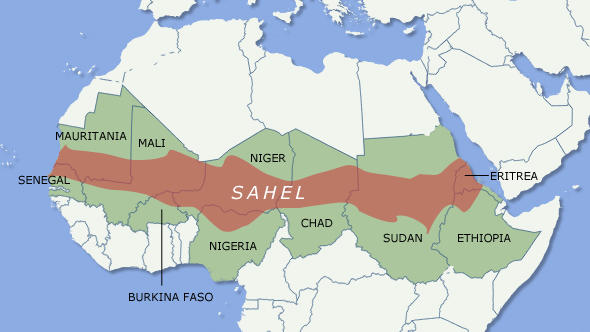
 Map of the Sahel. A three million square kilometre strip of aridity stretches from the Atlantic to the Red Sea, bathing the poorest regions of the planet with its high temperatures. In the Sahel, “the hunger belt”, when humanity had not yet noticed climate change, its consequences were already being felt. Droughts became relentless and extreme, and the desert advanced unstoppably in its bowels on the shoulders of deforestation, whose flames were fanned by a growing population that found wood as the only resource to cook and warm their numb limbs.
Since the 1970s, few have been able to enjoy prosperity in this forgotten land. In those years and during the 1980s, several periods of famine battered the stomachs of the Sahel from one end to the other, claiming more than 100,000 lives in the last blow alone.
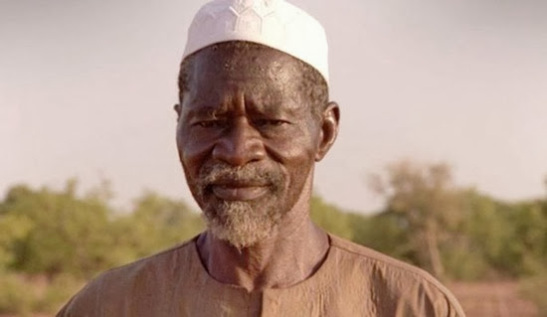
A Burkinabé farmer, Yacouba Sawadogo, has managed to make more than three million hectares of desert land fertile. He has managed to stop the unstoppable advance of the desert in his country using a traditional agricultural technique called “Zaï”, although he has adapted it to modern times.
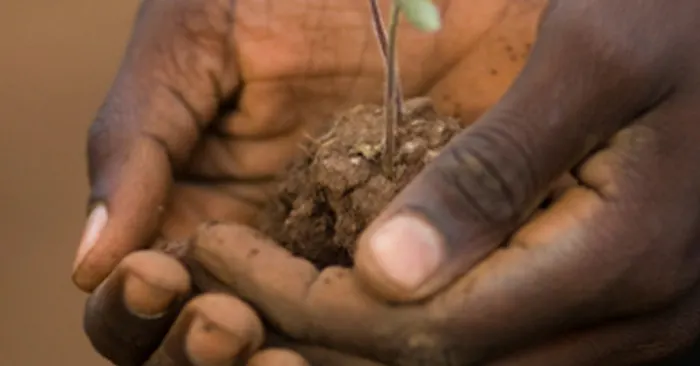
This method consists of digging holes of about twenty centimetres in which manure and fertiliser are deposited alongside the seeds. After three years of experimentation, this stubborn Burkinabé is convinced that “Zaï” can be the definitive solution to stop the desert.
The manure attracts termites, which digest the organic matter, releasing more nutrients for the plants, and create a network of galleries that helps water circulate under the soil when it rains. In addition, cordons pierreux, long rows of stones that retain rainwater and prevent erosion, stretch across the fields.
Over time, the results have caught the attention of the population itself, then of the Burkinabé authorities and, finally, of international experts from the FAO and the African Development Bank. Thus, the movement inspired by this farmer has planted millions of trees in an area of hundreds of hectares that had long been deforested.
Since then, his ingenuity has been successfully exported to other countries in the region, and is proof that the solutions to the problems are found within the continent itself. This is a practical reason that can support the Afro-optimistic discourse on the present and future of most African countries, a discourse that has overcome traditional Afro-pessimism, a tragic and pessimistic narrative of Africa inspired by 19th-century Hegelian theses.
Chris Reij, one of the world's leading experts in dryland recovery, who works for the World Resources Institute in Washington and the Free University of Amsterdam, has acknowledged that “Sawadogo alone has had more impact on soil and water conservation in the Sahel than all national and international researchers combined”. For his part, Ali Oudregou, an agronomist at the Ministry of Agriculture of Burkina Faso, says they have “seen the extraordinary results of his system, which allows farmers to double and even triple their harvests”.
Here is the trailer with Spanish subtitles of the BBC documentary that tells the incredible story of Yacouba Sawadogo, 'The Man Who Stopped the Desert'.
Sources: Airy Domínguez Teruel from greenpcomunicacion (in Spanish) | Udare (in Spanish) | csaranjuez (in Spanish) | Noticias Positivas from ABC (in Spanish)