The mandatory CUE comes into effect on 1 January 2027: from that date, plant protection treatments must be recorded in the digital farm logbook. Many farmers and agronomists see it as just another burden. BrioAgro Tech argues the opposite: with Farmlog, the farmer logs data via WhatsApp and the adviser receives everything organised to comply… and to manage better.
Published in HortiDaily. This interview was published on Thursday 1 October 2026 in HortiDaily.es (in Spanish), written by Mauricio García, and the following day in its international English edition, HortiDaily.com. Here we reproduce an expanded version, with a summary, a table of deadlines and FAQs.
Key points in 30 seconds
- Key date: the digital recording of plant protection treatments in the digital farm logbook (CUE) will be mandatory in Spain from 1 January 2027.
- Farm logbook via WhatsApp: with Farmlog, the farmer can report any field operation with a message, a photo or a voice note, without having to learn a new app.
- Adviser dashboard: the agronomist reviews, completes and validates the records of all their farms from a single dashboard.
- Invoices and delivery notes: a photo is enough; Farmlog extracts products and quantities and saves the original document alongside the record.
- Connection with the Administration: it imports data from the REA (Spanish register of farms) and prepares the communication with SIEX (Spain's farm information system) according to the integration of each autonomous community. It is the first digital farm logbook to be operational across all 17 autonomous communities.

From farm logbook as an obligation to a management tool
With the introduction of the mandatory digital logbook for plant protection treatments on 1 January 2027, many farmers and agronomists see recording actions as just another chore. At BrioAgro they maintain that the farm logbook can instead be a management tool.
José Luis Bustos, the company's director, sums it up like this:
“With Farmlog, the farm logbook stops being a burden and becomes a management tool. The farmer logs any operation with a simple WhatsApp message, even by voice, and the adviser has all their farms' information up to date, ready to supervise, document and comply. Less time recording data, more time using it.”
José Luis Bustos, director of BrioAgro Tech
But he prefers to let a daily user tell the story. That is why he suggests speaking to Enrique Jiménez, an agricultural engineer who has been managing his farmers' farm logbooks for over ten years and who now works with Farmlog.
Interview with Enrique Jiménez, agricultural engineer and adviser
Why is the farm logbook often seen as a burden?
Because for years it has been, above all, paperwork: writing down treatments, fertilisation, irrigation or harvests at the end of the day, when the farmer is already tired, and often days later. With the shift to a digital format, many fear it will mean even more work in front of a screen. And if the record is only used for compliance, it makes sense that it is seen as an obligation with no return.
What takes up most of your time when maintaining the logbooks for several farms?
Reconstructing what has happened. One farmer reports an action to me over the phone; another sends me a message; an invoice arrives days later. I need to know which parcel each piece of data belongs to and if anything is missing. When the information is linked to their farm, I can focus my review on completing and checking the records, spending less time searching through conversations and documents.
What changes with Farmlog?
The approach. Farmlog is a digital logbook, but not just another one: the idea is to move from recording data to actually using it. Plant protection treatments, fertilisation, irrigation, harvests, inventory and documentation are linked to each parcel, along with their traceability and history, and that information is shared with the adviser.
“The record stops being a file that is only opened during an inspection and becomes the basis for managing the farm.”
Enrique Jiménez, agricultural engineer
How does WhatsApp fit into that way of working?
The farmer can report an operation with a message, a photo or a voice note from the field, without having to learn a new app. Farmlog transforms that information into records that can be reviewed, and the original message is saved in case any queries arise.
For me, that automation is what makes the difference: I use a channel I already used with the farmer and greatly reduce the need to chase them up, only to then have to fill in those details myself. The review is still necessary: if the date, the parcel or any detail of the action is missing, it has to be completed.
Can you give an example of how it helps you on a day-to-day basis?
A farmer carries out a treatment on a parcel and sends Farmlog a voice note via WhatsApp stating the date, the parcel, the product and the quantity applied. That information allows the record to be drafted in the logbook. Within the maximum period of 30 days from the application, I review the record and, if any data is missing, we complete it together. When we plan the next treatment, we can check what was applied previously and when. This way, a simple message from the field becomes useful information for advising the farmer.
Who is involved in the logbook, besides the farmer?
We advisers are involved: we review records, prescribe treatments and fertilisation, and monitor the farms. The technical teams of cooperatives, SATs or agricultural service companies can also be involved, with the corresponding permissions. Farmlog connects that work: the farmer provides information, mainly via WhatsApp, and we organise and validate it from the technical dashboard.
The Administration is also involved: data is imported from the REA and communication with SIEX is prepared, according to the integration available in each autonomous community. This way, the CUE gathers information to provide advice, document actions and meet administrative requirements, keeping the farmer and their adviser coordinated.
What does it offer the adviser who works with several farmers?
This is where it is most noticeable. I can manage different farms from the same dashboard, review the records and follow each farmer's campaign. Before a visit, I check the work carried out, the documentation and any pending issues, and focus the conversation on what needs attention.
Furthermore, when it is time to prepare the PAC applications for 2027, I will extract the records I need from the CUE and cross-check them with the REA data. Having kept that information organised and reviewed during the campaign already makes that work easier: it reduces last-minute queries, avoids repeatedly asking for documents and allows me to dedicate more time to advising.
When does the record become useful management information?
When I can return to it to answer a specific question. For example, what fertilisation was carried out before a harvest, when the last irrigation was recorded, or what treatments are listed for a crop. Checking the history gives context to the advice. The agronomic decision still requires technical judgement and knowledge of the farm and the crop.
How does Farmlog help with invoices and delivery notes?
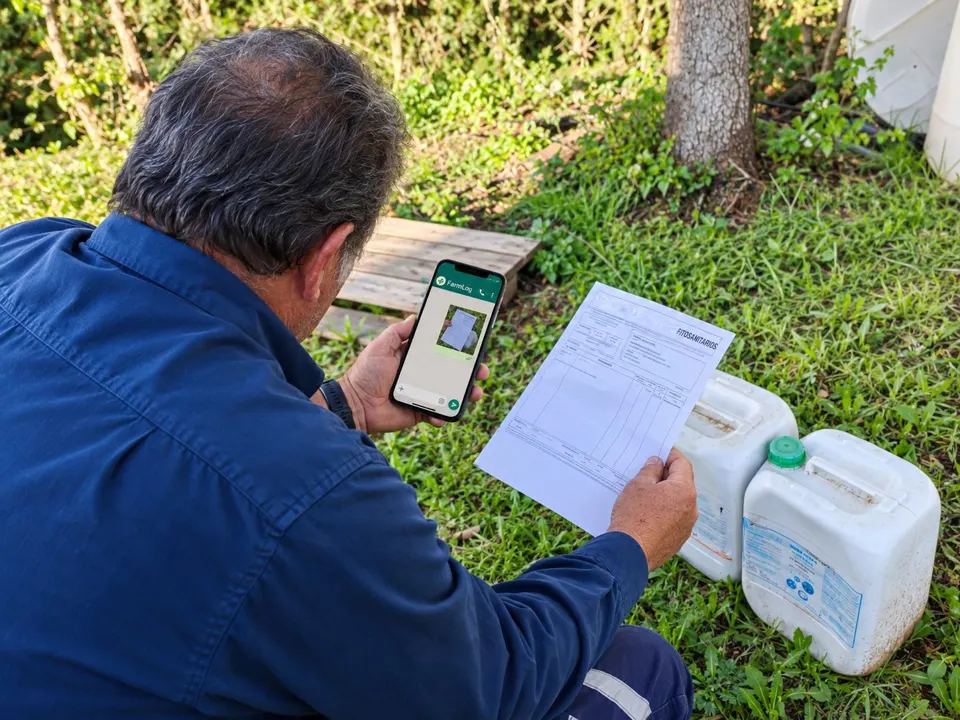
The farmer can send a photo of the invoice or delivery note, and Farmlog automatically extracts data such as the products purchased and their quantities. This way we avoid entering all the information by hand. I check that the data is correct and linked to the corresponding farm, to review purchases and inventory. In addition, the original document is saved alongside the record, so we can check it if any queries arise.
What the mandatory CUE regulations require in 2027
What do the regulations require today?
Farms must keep the records required by the regulations up to date. Regarding fertilisation, obligated farms must log each application within a maximum period of one month. As for plant protection treatments, digital recording will be mandatory from 1 January 2027: each application must be logged without undue delay and, if initially recorded on paper, must be transferred to electronic format, as a general rule, within a maximum period of 30 days from its execution.
For the rest of the entries, the digital format remains voluntary, unless there is a specific obligation. Looking ahead to the next PAC period, it is planned that fertilisation and the rest of the entries will also be incorporated. My advice is to record actions as they are carried out and review the requirements and possible applicable exceptions with your adviser.
| Type of record | What is required | Deadline |
|---|---|---|
| Plant protection treatments | Mandatory digital record from 1 January 2027 | Without undue delay; if noted on paper, transfer it to electronic format within a maximum of 30 days (general rule) |
| Fertilisation (obligated farms) | Note down each application | Maximum one month |
| Rest of entries | Voluntary digital format, unless specifically required | Planned for incorporation in the next PAC period |
More detail in our article When does the CUE come into force for Spanish farmers?
And how does Farmlog help prepare the digital logbook?
Keeping records up to date and retaining documentation makes it easier to prepare and review the digital farm logbook, the CUE. The farmer and adviser can work on the same information, with their access permissions. This organisation also helps to prepare the data that must be reported to the Administration, in accordance with the applicable procedures.
What comes next and how to start
In what direction can the tool evolve?
Towards integration with irrigation and crop monitoring systems. BrioAgro also works with sensor technology and irrigation, and some of this data can flow into the logbook without anyone having to record it. It is a short-term line of work that points in the same direction.
“Less time recording and more time deciding and optimising resources.”
Enrique Jiménez, agricultural engineer
Does the farmer have to change their way of working?
No, and that is key. Farmlog adapts to the way the farmer already communicates and records information, especially via WhatsApp. They do not need to learn how to use a complex programme: they can recount what they have done, just as they already do with their agronomist. Furthermore, farmers who feel more comfortable with digital tools can log in to their dashboard to directly consult and manage their farm's information.
How would you advise a farmer with little time to get started?
With a simple routine:
- Import REA data or complete the farm's basic information.
- Report the work carried out daily, directly from the field.
- Review the records with your agronomist.
There is no need to change all habits at once. After a few weeks, you will be able to see how much time you spend keeping the logbook up to date, what information is missing and what doubts you can resolve by consulting the history. This way you can assess its usefulness in your daily work.
Farmlog access
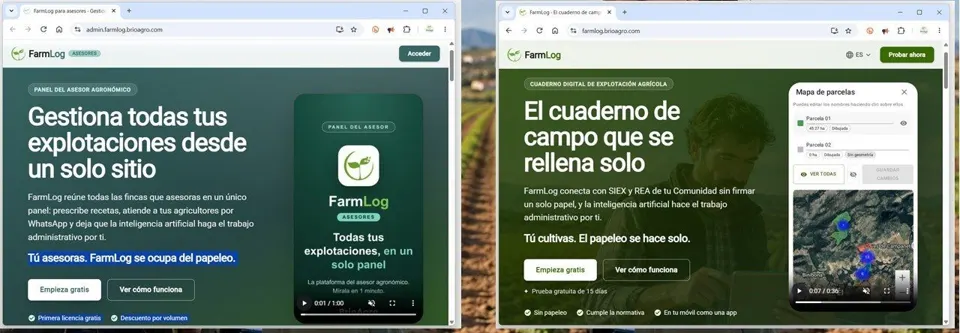
- Agronomists and advisers: admin.farmlog.brioagro.com: management of all farms from a single dashboard. First licence free and volume discounts.
- Farmers: farmlog.brioagro.com: the farm logbook that fills itself in, with a 15-day free trial.
FAQs about the CUE and Farmlog
When does the CUE become mandatory for plant protection treatments?
From 1 January 2027. Each application must be recorded without undue delay and, if it is first recorded on paper, it must be transferred to electronic format, as a general rule, within a maximum of 30 days.
Can the farm logbook be filled in via WhatsApp?
Yes. With Farmlog, the farmer sends a message, a photo or an audio via WhatsApp; Farmlog converts it into logbook records that the adviser reviews and validates, and the original message is saved.
Does Farmlog work for advisers managing several farms?
Yes. The adviser dashboard brings together all the farms, allows them to review records, prescribe treatments and fertilisation, and follow each farmer's campaign. Cooperatives, SATs and agricultural service companies can also work on it, with their respective permissions.
Does Farmlog connect to the REA and SIEX?
Yes. It imports REA data and prepares communication with SIEX according to the integration available in each autonomous community. Farmlog is the first digital farm logbook operational in the 17 autonomous communities.
Source: interview published in HortiDaily.es (in Spanish) on 1 October 2026. Photos: © BrioAgro.