Report published in ABC Economía on 21 July 2025, under the title:
«The countryside combats water stress with a rich innovative harvest (in Spanish)«
In it, they offer their point of view: José Luis Bustos, director of BrioAgro; Manuel Hernández, manager of Maher Electrónica; José Ugarrio, agronomist at Asaja; and Francisco Sánchez Millán, industrial engineer from the UPCT and collaborator of the CEBAS-CSIC.
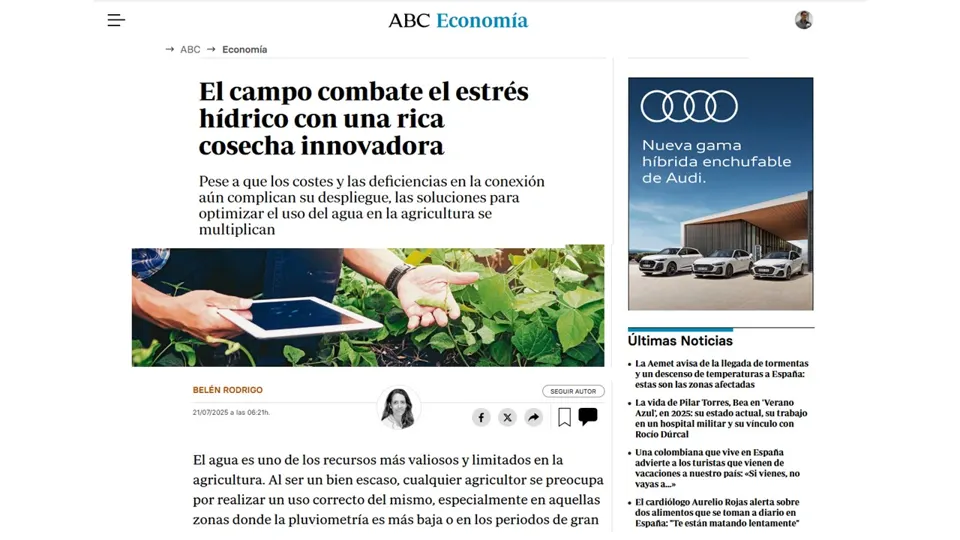 (in Spanish)
Water is one of the most valuable and limited resources in agriculture. As it is a scarce commodity, any farmer is concerned about making correct use of it, especially in those areas where rainfall is lower or in periods of high water stress. With the arrival of technology, the use of smart irrigation has spread to optimise water and energy consumption in crop irrigation.
Interview with BrioAgro to understand the BrioAgro Aqua Smart Irrigation system
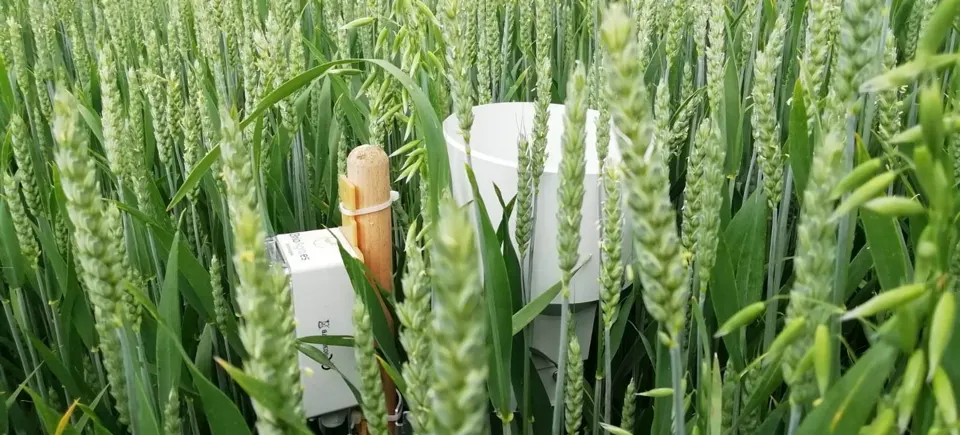
Many companies dedicated to the development of smart irrigation systems have been improving and perfecting the technology, offering farmers increasingly comprehensive tools. The company BrioAgro launched the AQUA system as an evolution of the BrioAgro ViTA sensors, which monitor the vital signs in which the crop develops. “This system provides the necessary information to irrigate exactly when the crop needs it”, explains José Luis Bustos, co-founding partner of BrioAgro. Based on agronomic fundamentals and supported by innovative technology, “an agronomic interpretation of the data is carried out to show the farmer the precise moment when they must irrigate”, he points out. Once it is known when and how much to irrigate, AQUA comes into play, the irrigation actuator responsible for executing the irrigation at the exact moment.
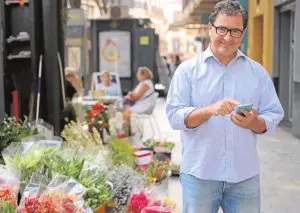 BrioAgro uses advanced sensors, the Internet of Things (IoT), cloud computing, algorithms and artificial intelligence. “Its most outstanding differential element is the soil moisture calibration algorithm used, which adapts to the type of crop and soil, and is improved through artificial intelligence”, Bustos highlights. It also uses geolocated meteorology and multispectral satellite imagery.
José Luis Bustos, co-founder of BrioAgro, recalls that climate change continually alters the usual patterns: heatwaves, extreme cold or intense rains force decisions to be adjusted almost in real time. That is why the solutions designed by this company allow irrigation to be applied exactly when the crop needs it. “Sometimes you have to irrigate more, such as on very hot or windy days, and other times less, when moisture is maintained. This optimises irrigation and protects the crop against extreme conditions”, he underlines.
Sensor data is collected every few minutes on the farm; it is not stored on the field devices, but sent to the internet, where it is stored and processed. As the co-founder highlights, “subsequently, the farmer can view it, already as interpreted information, adapted to their crop and soil type, which they can consult from their mobile phone or computer”.
All types of crops
This system is used mostly in irrigated crops, in any of them, “we have experience in more than 60 crop families, practically all of them: horticultural crops, woody crops, fruit trees, cereals, legumes, aromatic plants, tropical crops, seedbeds, crops for industry and animal feed... both outdoors and in the greenhouse”, Bustos clarifies. Currently, they are also using monitoring points in dryland cooperatives, to offer farmers climate information and data on what is happening in the soil, next to the roots. Savings in water, fertilisers, plant protection products, labour dedicated to irrigation and energy are the benefits it brings to the farmer. Furthermore, “the energy saving is linear: if 30% of water is saved, the energy bill associated with pumping is reduced by 30%”.
And they assure that this system does not entail a heavy financial investment since “you can start from 1,500 euros, an investment that pays for itself in a few months. From there, you can expand functionalities to advance towards smart fertigation, which is the maximum functionality of the AQUA system, or towards more soil, climate or crop sensors”, the partners point out.