The Austrian newspaper DerStandard answers the question, where are the solutions? Highlighting BrioAgro for its cutting-edge technology innovations to help agriculture face water shortages, a consequence of climate change.
On 1 May, the prestigious Austrian newspaper “Der Standard” published an article on STAUBTROCKENE ÄCKER (DRY FIELDS), titled: Drought in Spain puts farmers in a state of emergency: what does this mean for vegetable prices?
The article focuses in depth on the reality of a “clear and warm” country, known as such by the millions of tourists who visit it every year, a country whose future is threatened by an “endless drought that is a nightmare for agriculture and livestock farming”.
We include part of the article where it refers to BrioAgro and its collaborators:
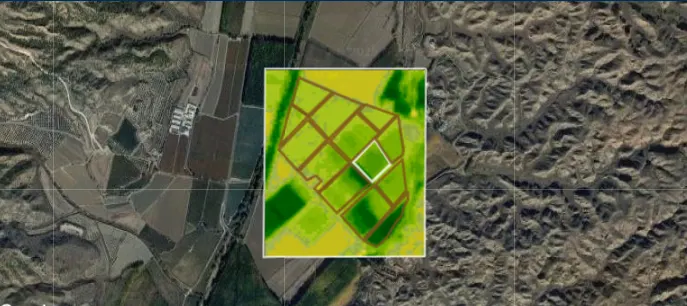
Where are the solutions?
The solutions are found in cutting-edge technology, digitalisation and sensor technology. It is not that Almería did not think and plan ahead. Even if the consequences of climate change will probably eclipse the forecasts. Without the widespread use of drip irrigation for decades, almost nothing would grow in Spain anyway. And it is clearly used in extensive olive groves or in viticulture.
“Water saving is at the heart of our company”, José Luis Bustos, head of BrioAgro, tells STANDARD. Since the beginnings of his startup, he can now count on more than 500 installations, almost 100 of them highly recognised clients. And without losing focus on the “sea of plastic” near Almería between El Ejido, Roquetas de Mar and Campo de Níjar, in the Cabo de Gata natural park or on the coasts of the autonomous community of Murcia, where the “vegetable greenhouses of Europe” are located. Also in Portugal, Italy and other Spanish regions where rainwater is scarce, such as Catalonia, Aragon, in Navarre or near Valladolid (Castile and León).
Satellite and solar
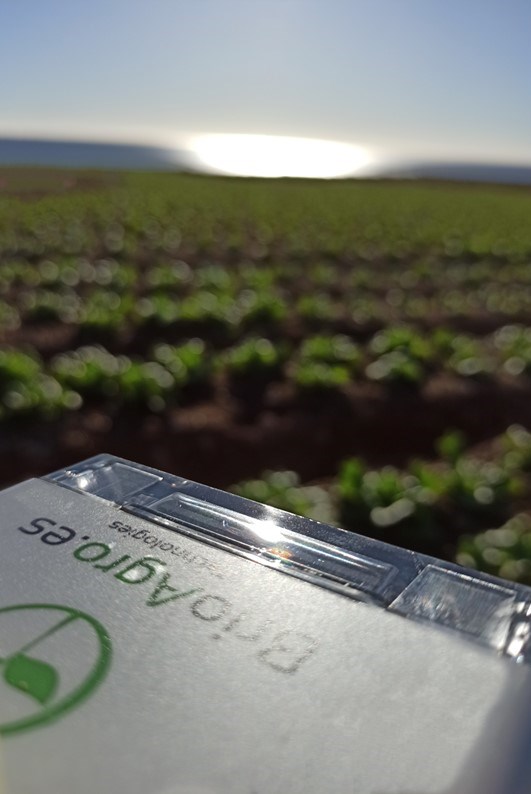
Its clients include producers of leafy crops and lettuce for an American fast-food chain. It does not matter if it is citrus or subtropical fruits and vegetables that require a lot of water, such as avocados, which are also produced in southern Spain. “Most farmers trust their eyes when it comes to irrigation”, Bustos continues. “But our system is fully automated, with satellite image analysis and solar-powered sensors for hydrological measurement, we are much more precise”. Bustos is currently working on multiple projects linked to water saving, such as an EU project (Gen4Olive) with Spain and Italy to thoroughly analyse olive trees growing without irrigation input during an extreme year.
Bustos insists that in addition to technology solutions, there is a global concept that ranges from the renaturalisation of the river landscape, planting trees at altitude to store water, to damming river water at the sea mouth, including the reuse of wastewater and, of course, the expansion of seawater desalination. Every drop counts here, because after local groundwater levels have dropped drastically for decades, there is not enough rain to replenish them. Seawater desalination is providing the necessary water for farming near the coast.
“Desalinated water is more expensive, but even so, it is better than having no water”, Bustos says. Furthermore, technological advances have significantly reduced the cost of desalination. He sees another future opportunity in biodegradable gels that store water and nutrients in the root zone and release them when needed. And given that organic labels give no indication of water use, Bustos is in favour of making the product's water consumption traceable for consumers.
“Increasingly restrictive”
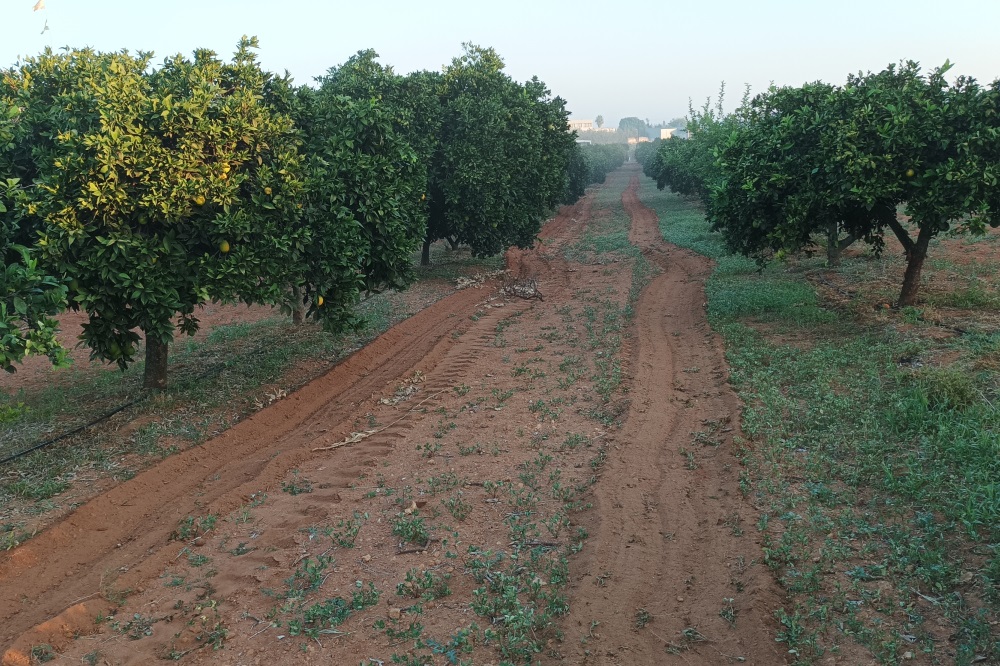
Roberto Chaves Álvarez from Deeper Agro 4.0 and Fuensol 2006, based in Valladolid (Castile and León), works with 14 irrigation contractors in the Duero river basin, an important wine-growing region in central Spain. “Water consumption is currently being significantly reduced”, he says in the STANDARD interview. “We only irrigate with groundwater, currently the limit is around 4,800-6,000 cubic metres per hectare. It is becoming increasingly restrictive when it comes to irrigating our area”.
Groundwater reserves are reportedly at their limit and would hardly be replenished by rain and snowfall. Fewer potatoes or beetroots are grown and also, due to rising prices, more wheat and sunflowers. In the case of wine, Ribera del Duero and Rueda, the expected price increase for customers in Austria is linked more to higher bottle, cork and transport prices than to a lack of water, Chaves Álvarez stresses. “But dry and hot years can also be good for excellent wine harvests, like last year”.
Prices increased
In response to STANDARD's question, the WKO said “that it is becoming increasingly difficult to grow fruit and vegetables in Spain due to climate change”. However, there have also been record harvests in recent years because producers are flexible, use new technologies and are therefore becoming more effective. Nevertheless, the previous year was a weaker year with lower yields, which pushed prices up by around 10%. This was also reflected in exports to Austria, where volumes fell or stagnated. However, harvest results often differ from one crop to another. For example, this year's strawberry harvest has not been good (October too hot, January and February too cold), while the apricot harvest will be abundant.
According to experts, the current heatwave does not in itself cause a major change in yields and prices, because heatwaves in Spain are normal to a certain extent. “However, if there are as many hot days as the previous year (when the annual temperature was 1.7% higher than the 1981-2010 reference period) and precipitation is below average (previous year 84% of the 1981-2010 reference period), we will see a challenging year again”, according to the WKO.
Is there a future under plastic?
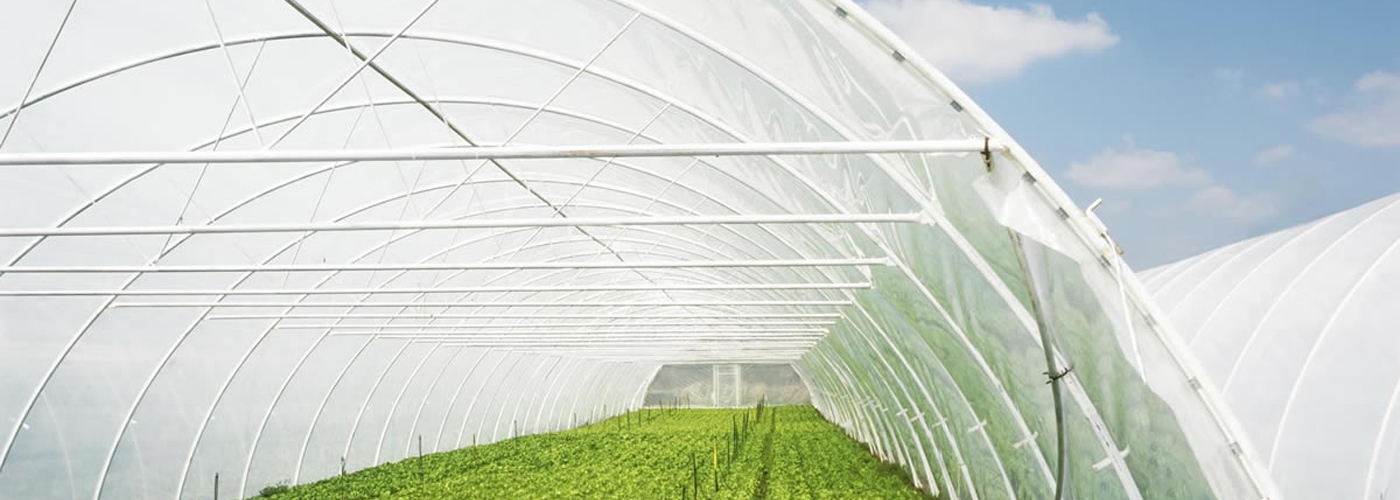
The Italian agronomist Francesca Berti from Bologna is working on her doctoral thesis at the University of Almería and working at BrioAgro. However, her topic is not water management, but biological substrates and fertilisers, which she develops from agricultural production waste in the region and also from algae. “Greenhouse farming is a complex and holistic system”, she says. “All elements play together: of course, water, nutrients, the substrate like the soil and heat. With digital and sensor technology, the growth process up to the final product can be made extremely efficient and continuously optimised”, she gives hope. And stress factors such as a lack of water or extreme heat can be recognised early and counteracted.
Source: Jan Marot, 1 May 2023, derstandard.at