
BrioAgro Aqua smart irrigation for vegetables provides water and fertiliser when they are needed, saving energy, water and fertilisers.

Greater convenience

Upgrade irrigation controllers

From manual to automatic
BrioAgro Aqua in vegetables
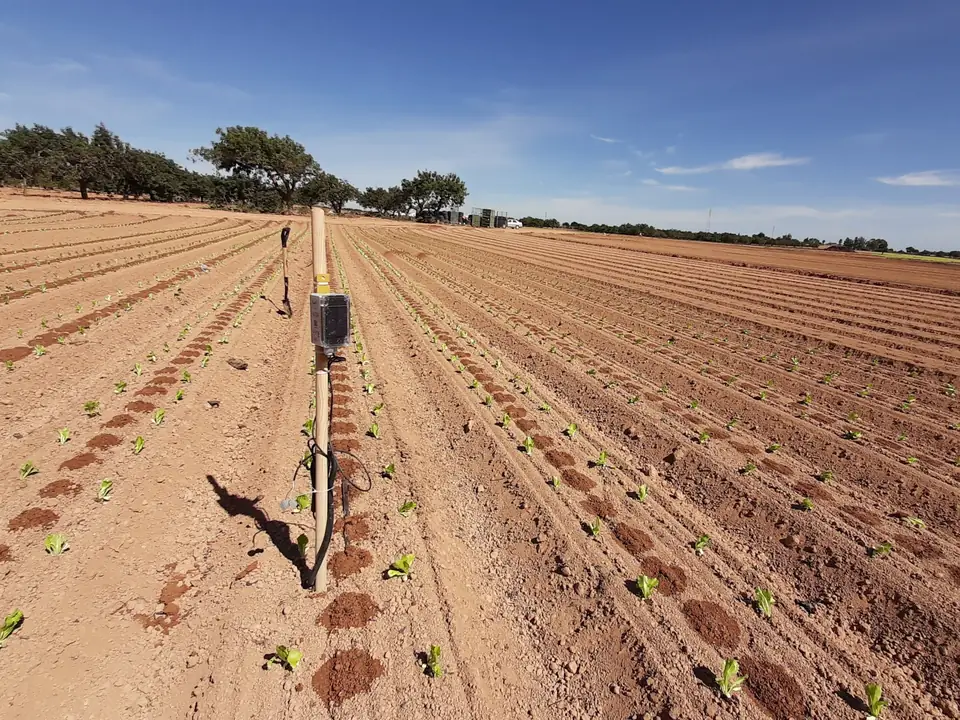
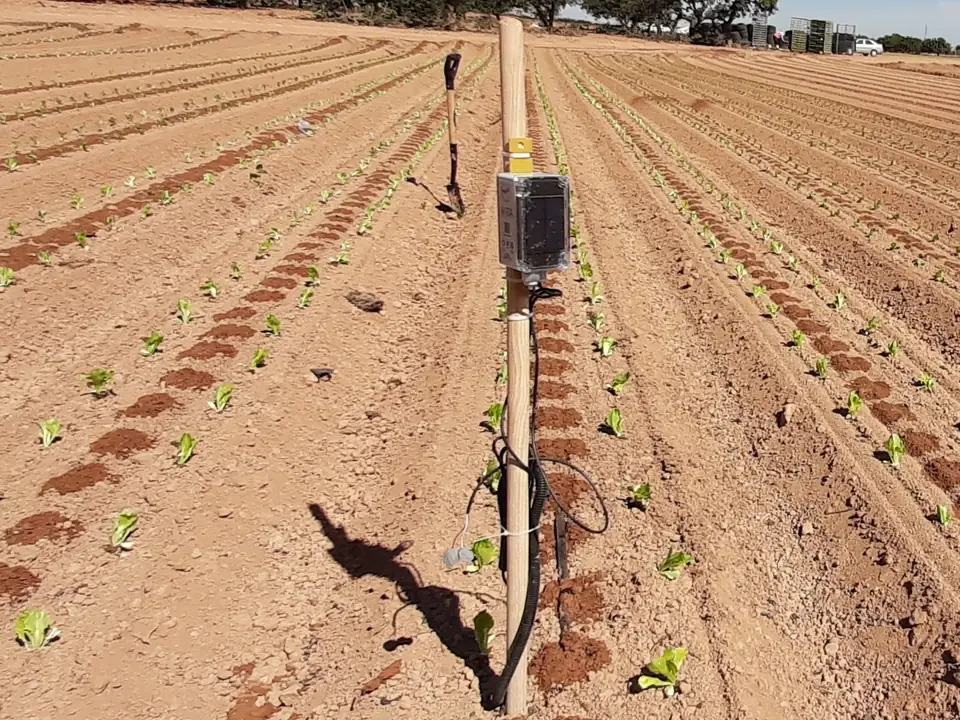
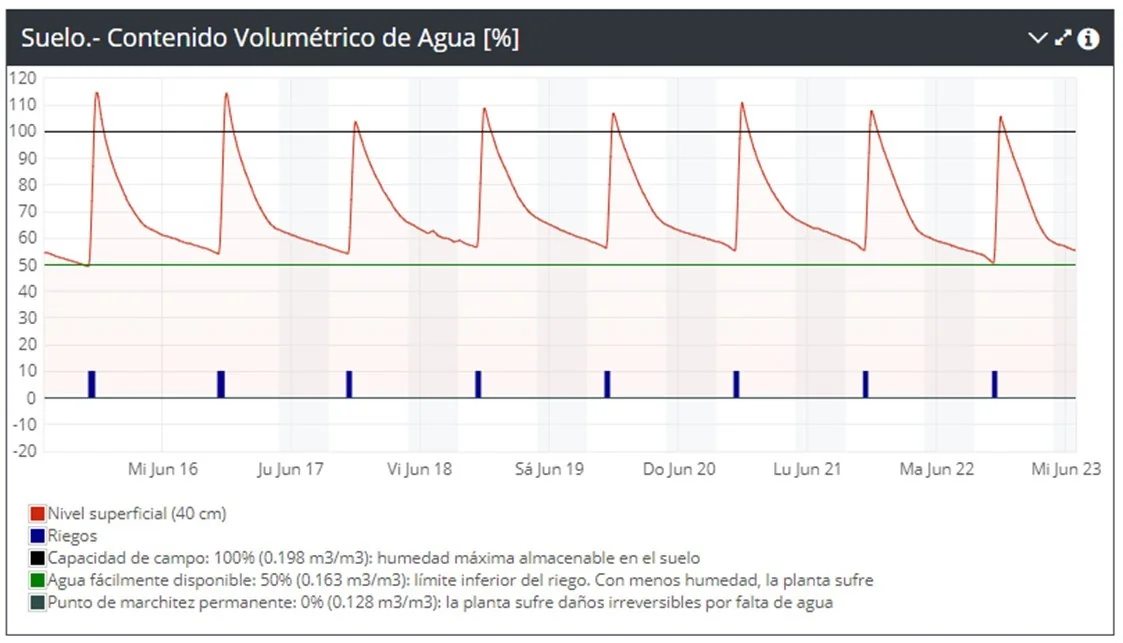
BrioAgro Aqua is an irrigation and fertigation controller that acts in real time thanks to the information collected by BrioAgro ViTA sensors. The most important parameter is soil moisture in relation to field capacity, adjusted to the readily available water for each crop.
In addition, many other indicators are monitored, such as soil conductivity and temperature, as well as the microclimate: water deficit, VPD, relative humidity, atmospheric pressure, temperature, luminosity, rainfall… With all these data, together with detailed knowledge of the soil type and the crop's phenological stage, irrigation is carried out exactly when the crop needs it.
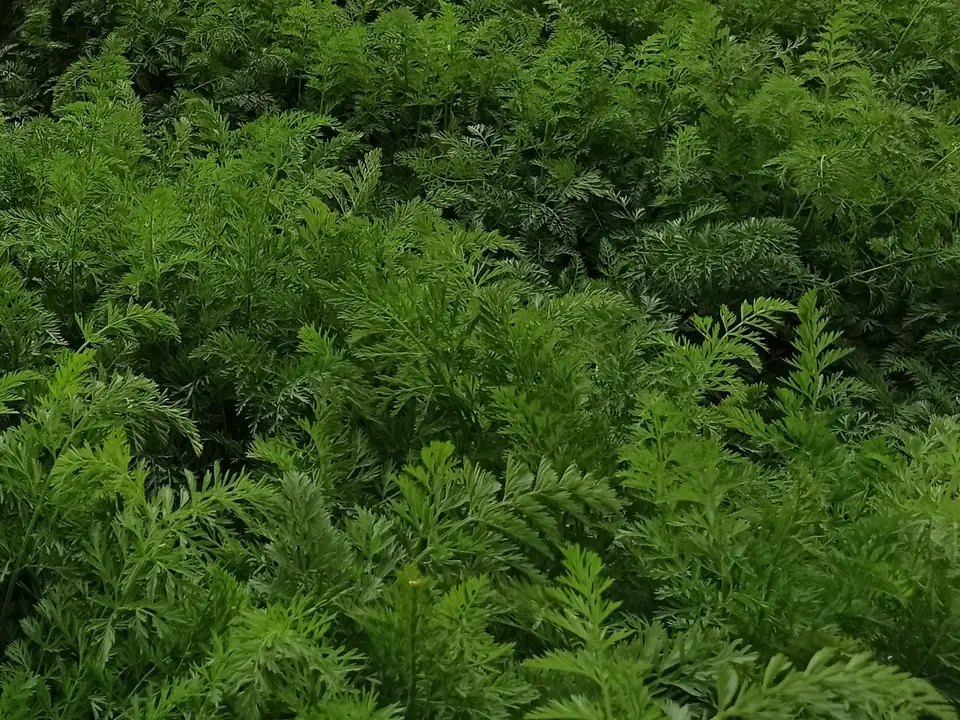
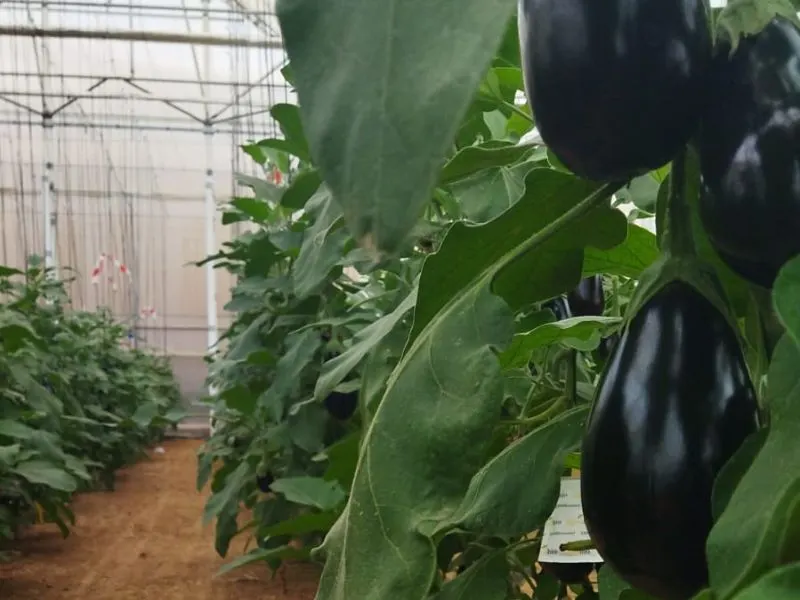
The wide variety of vegetables and their different irrigation requirements make BrioAgro an indispensable tool for adjusting irrigation to each variety and soil type. In a trial published by the SECH, carried out by BrioAgro together with Fundación Cajamar, BrioAgro far exceeded the results established by the FAO guidelines for horticultural crops, obtaining 68% more kilograms per m³ of water used.
- Always seeking the highest crop quality, greater efficiency in the use of fertilisers is achieved, applying them exactly when the plant can assimilate them, which reduces their leaching.
- BrioAgro optimises every drop of water, achieving maximum production per m³ of water, well above the FAO recommendations for the crop, exceeding the kilos of production in our trials.
- We save between 20% and 50% of water, depending on the soil type and crop. By irrigating less, the energy bill also decreases. Furthermore, the system is adjusted to avoid irrigation during peak energy cost hours.
In short, a reduction in costs and better practices that strengthen environmental sustainability and, above all, the farmer's economic sustainability.
Features
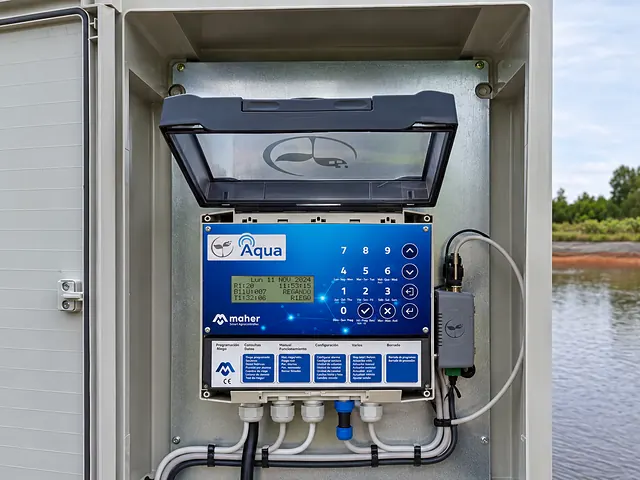
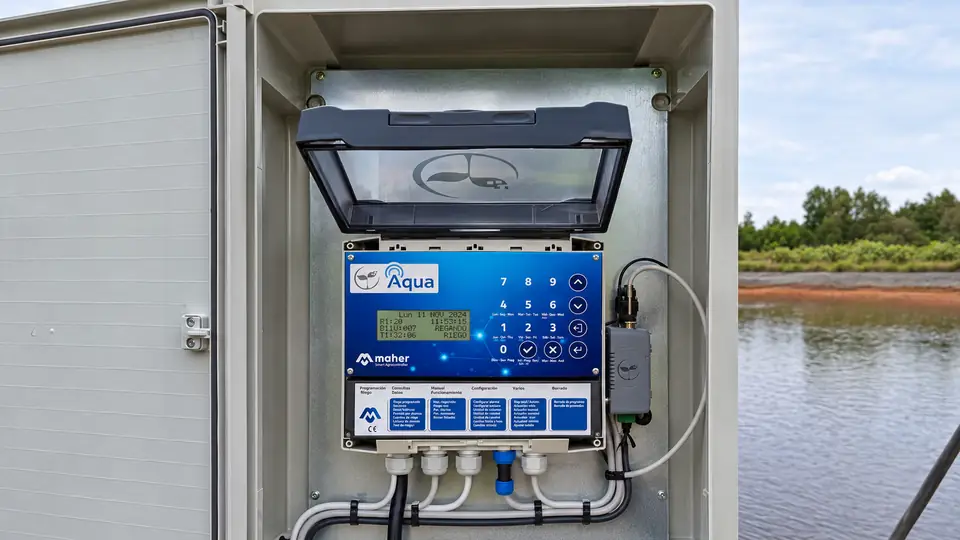
BrioAgro Aqua is an irrigation controller adaptable to any need on the farm: number of sectors, quantity of fertiliser tanks, irrigation pumps, different water sources, pH and electrical conductivity (EC) control, with mains electricity or solar power with battery options, and compatible with wired, hydraulic, alternating current (AC), direct current (DC), latching and even wireless valves. Furthermore, in greenhouses it can be used as a climate control system. In short, it is a multifunctional controller that adapts to every situation, with the ability to be connected to the internet, allowing remote irrigation and integration with BrioAgro's sensor, satellite and microclimate information.
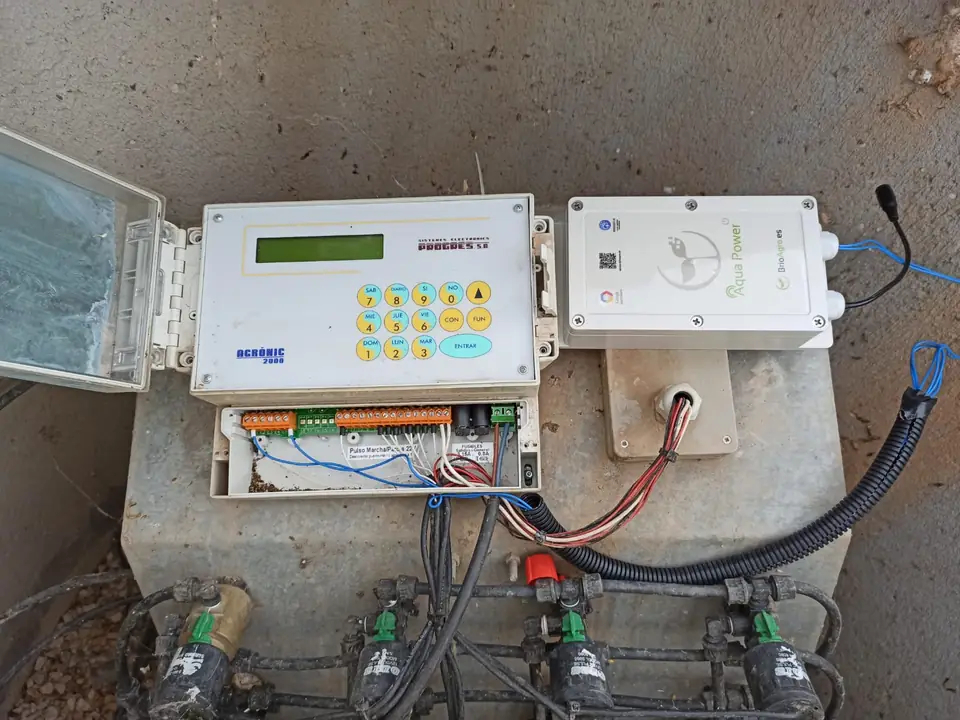
Additionally, if you already have an irrigation controller, we have a more affordable version that connects to your existing controller, allowing remote smart irrigation. This model is known as Aqua Power.
It can also control:
- Treatment tanks.
- Pressure sensors for pipes.
- Wireless solenoid valves
- Motorised battery charging, in case of solar power use.
- Unlimited number of sectors.
- Fertiliser pump.
- Water pump.
- Cleaning of fertiliser lines.
- Fertilisation by litres or by minutes.
- Fertiliser agitation.
- Irrigation reservoir management.
- Pulse rain gauge.
- General and Fertiliser pulse counter.
- Access to historical data on irrigation and fertilisers used in irrigation.
- Switch between scheduled irrigation (from your mobile) and smart irrigation with soil moisture sensors.
Monitoring (DSB)
The DSB (BrioAgro Monitoring Device) is the base that sends real-time data to the internet. These data come from sensors and meters, and make sense on the BrioAgro platform, where they are displayed as interpreted information to help the farmer make decisions. These data are obtained by the field sensors of the ViTA devices, by the Aqua irrigation controllers, by the satellites incorporated by BrioAgro (Sentinel and Planet), and by 15 geolocated meteorological indicators, as well as 7 and 15-day forecasts, sourced from NOAA.
In short, all these monitoring data allow smart irrigation to be carried out autonomously, where the farmer sets the guidelines and the irrigation system or robot acts, irrigating the crop.