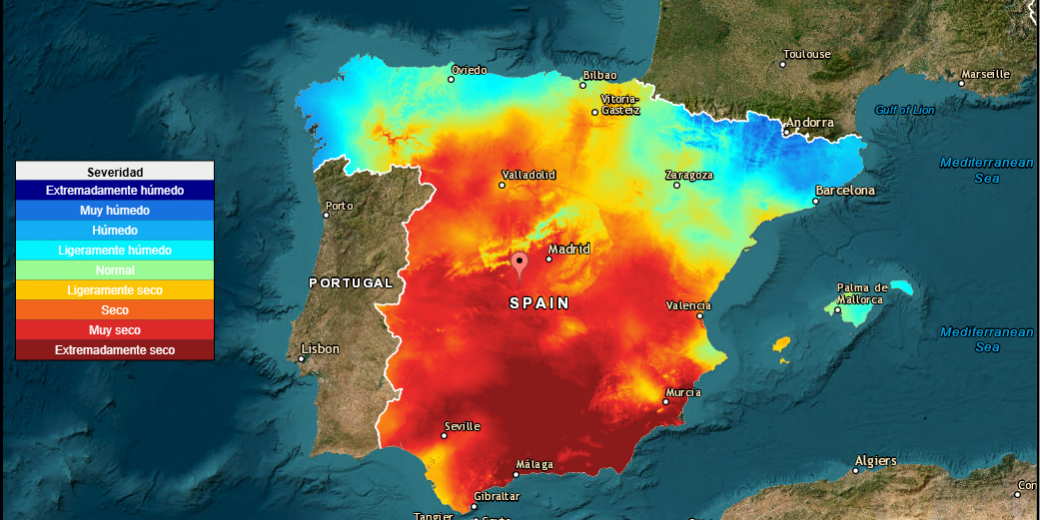
The Office C acts as a bridge between the scientific community and policymakers. Its role is to listen to experts, analyse studies on relevant issues—such as climate, water, or pests—and convey this information to Members of Parliament through clear and accessible summaries. The aim is for lawmaking to take scientific evidence into account, not just opinions. On 30/10/2025, it published the report “Drought in Spain”, a document that essentially highlights that drought has become one of the greatest challenges for Spanish agriculture. It analyses how irregular rainfall, rising temperatures, and pressure on water resources increase the vulnerability of the agricultural sector. In addition, it provides a comprehensive view of risk, its impacts, and the strategies needed to strengthen the resilience of the countryside. This is the most comprehensive assessment carried out to date of one of the most significant climate risks facing our country. You can download the full report in PDF format here: https://oficinac.es/sites/default/files/informes/2025_10_30_InformeC-Sequia-oficinac-fecyt-congreso.pdf At BrioAgro, we highlight eight key lines of work for the future of agriculture and livestock farming, drawn from this report:
Effectively modernising irrigation: implementing sprinkler or drip irrigation accompanied by a real reduction in water allocations and without expanding the irrigated area, reviewing water concessions to ensure that savings are genuine.
Precision agriculture and digitalisation: sensors, drones, GIS, IoT and artificial intelligence to adjust irrigation, fertilisation and management according to the real needs of crops.
More drought-tolerant varieties and crops: promoting genetic improvement focused on water stress and conserving plant genetic resources and wild relatives as a strategic reserve.
Agroecological and regenerative practices: agroecology, regenerative agriculture, agroforestry, cover crops, rotations, crop diversification and the use of beneficial microorganisms to improve soil health, organic matter and water-use efficiency.
Changing the production model: promoting less water-demanding crops, adjusting sowing calendars and diversifying income sources (for example, agritourism) to reduce economic vulnerability.
Rethinking irrigated land area: opening a national debate on its future scale, seeking a balance between profitability and resilience, and avoiding the “rebound effect” associated with modernisation if total consumption is not reduced.
Specific measures for livestock farming: efficient drinking systems, rainwater harvesting, extensive grazing and drought-adapted forage crops to reduce water use and maintain ecosystem services.
Economic and agricultural policy levers: drought insurance (including pasture loss), financial incentives, CAP eco-schemes and the review of concessions to steer decisions towards greater water resilience.
To provide the best experiences, we use technologies like cookies to store and/or access device information. Consenting to these technologies will allow us to process data such as browsing behavior or unique IDs on this site. Not consenting or withdrawing consent, may adversely affect certain features and functions.
Functional Always active
The technical storage or access is strictly necessary for the legitimate purpose of enabling the use of a specific service explicitly requested by the subscriber or user, or for the sole purpose of carrying out the transmission of a communication over an electronic communications network.
Preferences
The technical storage or access is necessary for the legitimate purpose of storing preferences that are not requested by the subscriber or user.
Statistics
The technical storage or access that is used exclusively for statistical purposes.The technical storage or access that is used exclusively for anonymous statistical purposes. Without a subpoena, voluntary compliance on the part of your Internet Service Provider, or additional records from a third party, information stored or retrieved for this purpose alone cannot usually be used to identify you.
Marketing
The technical storage or access is required to create user profiles to send advertising, or to track the user on a website or across several websites for similar marketing purposes.