

Irrigation efficiency in times of water deficit: results 2023–2025 and the value of real-time adaptation. Below, we show how BrioAgro outperforms the most commonly used irrigation decision methods, with successful cases in pepper, watermelon, and eggplant: a complete analysis with climatic context.
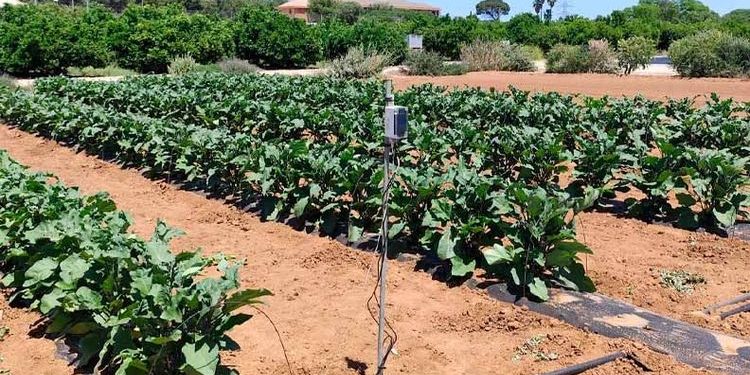
This November, Fundación Cajamar’s Plataforma Tierra has published the results of a trial carried out from April 1 to September 1, 2025, featuring a triple irrigation comparison, evaluated using three methodologies:
- FAO recommendations (Food and Agriculture Organization of the United Nations), based on evapotranspiration and widely used by agricultural technicians worldwide.
- Agronomic Criteria, applied by expert technicians with extensive experience in irrigation for horticultural and fruit crop trials.
- BrioAgro’s smart irrigation system, consisting of a soil moisture sensor and an actuator that manages irrigation based on real-time data. (with a cost starting from €140 per month)
The same methodology, used at the Experimental Farm of the Fundación Cajamar in Paiporta (Valencia), was already applied in previous seasons with other crops. In total, three trials have been carried out over the last three years:
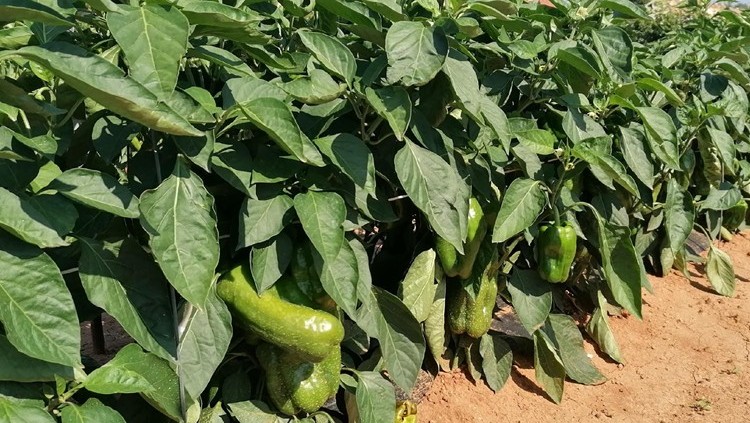
- Pepper – Variety Pompeo (Nuhmens). Planting: 09/03/2023. Harvest: from 16/06/2023 to 21/09/2023.
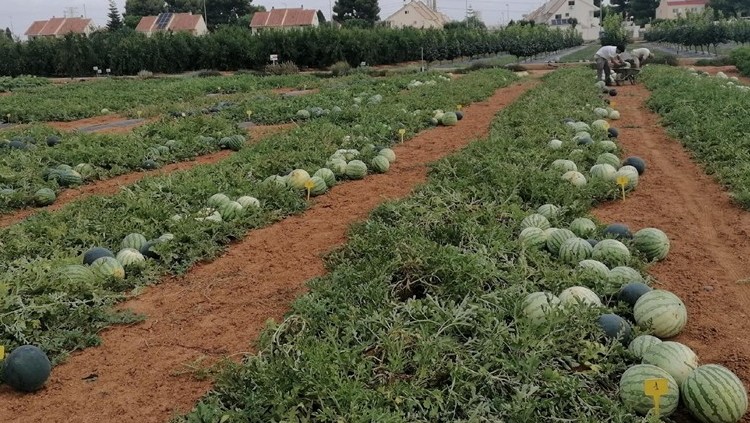
- Watermelon – Varieties Boston (Nuhmens) and Azabache (Intersemillas). Planting: 05/04/2023. Harvest: 17/07/2023.
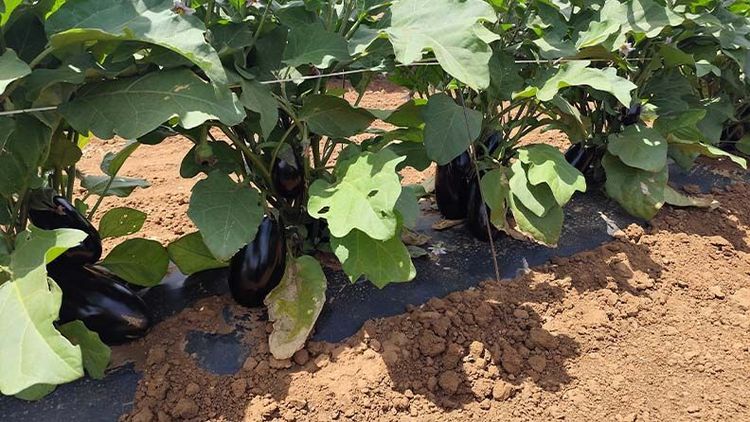
- Eggplant – Variety Cristal (Fitó). Planting: 02/04/2025. Harvest: 25/08/2025.
The analyzed trials show that the BrioAgro system not only increases production,
but also professionalizes irrigation management through precise tools and real-time data,
providing clear competitive advantages for the modern farmer.
This table summarizes the most outstanding results.
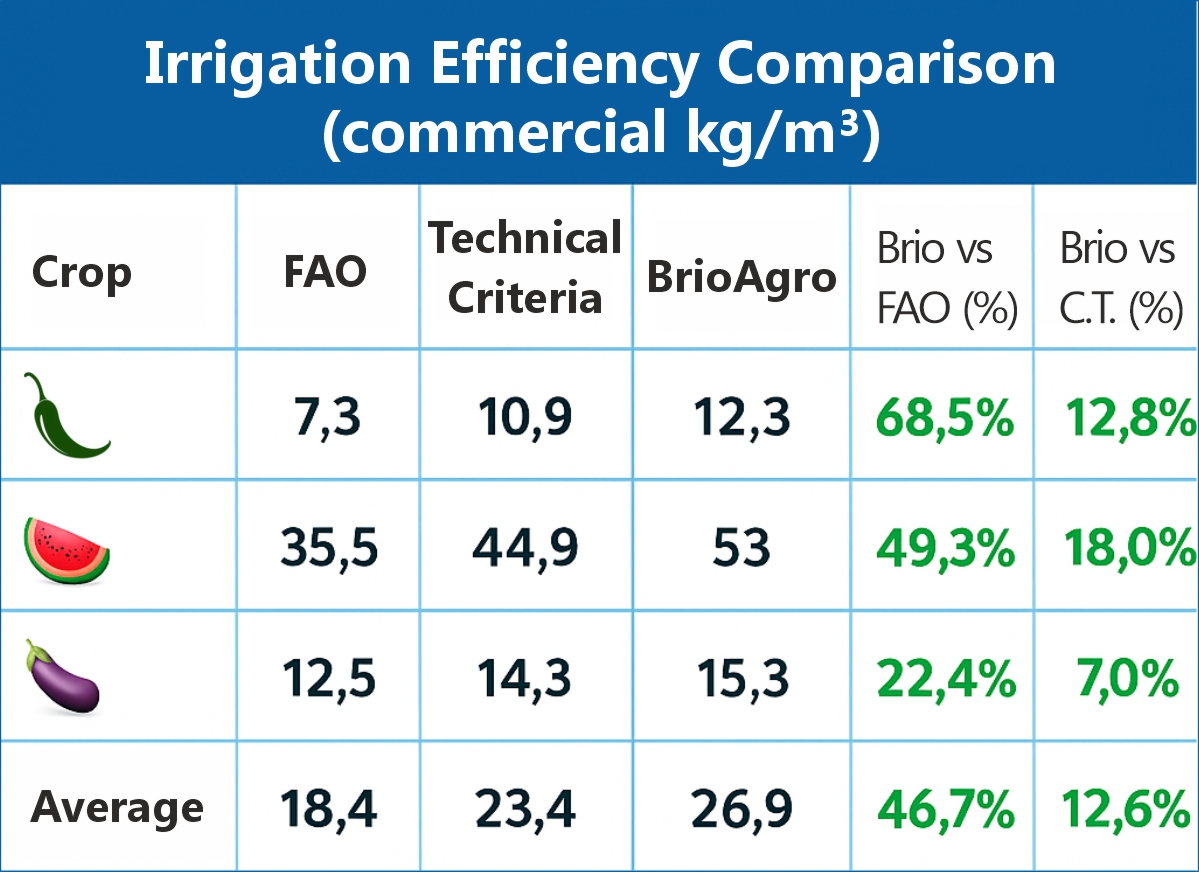
This demonstrates that BrioAgro’s system helps improve profitability without needing to expand cultivated area. It adapts to different crops and production systems.
From a scientific perspective, the watermelon results were noteworthy enough to merit publication in a “paper” by SECH – Spanish Society for Horticultural Science – sech.info

We would also like to highlight the production data.
In the case of watermelon, in 2023, yields were 12.3% higher than those obtained under the technical criteria of an agronomy expert, as BrioAgro achieved 9.8 t/ha more commercial production.
In the case of eggplant, in 2025, under very different conditions, the increase was 8.7%, which in absolute terms represents 7.8 t/ha more commercial production.
Climate analysis of the growing period
Period: April 1 – September 1 (years 2023, 2024, and 2025)
The analysis of climatic conditions over the last three years shows significant differences in atmospheric factors that directly influence the performance and water needs of horticultural crops.
Although the rains recorded at the beginning of 2025 might suggest a lower irrigation demand, this interpretation is not correct for irrigated horticultural crops. The exceptional rainfall in March mainly helped recharge aquifers and increase moisture in deeper soil layers. However, by the time the crop started in April, that moisture was barely available in the first 30 cm of soil, which are key for root uptake in short-cycle horticultural crops.
Environmental water deficit: evolution and comparison
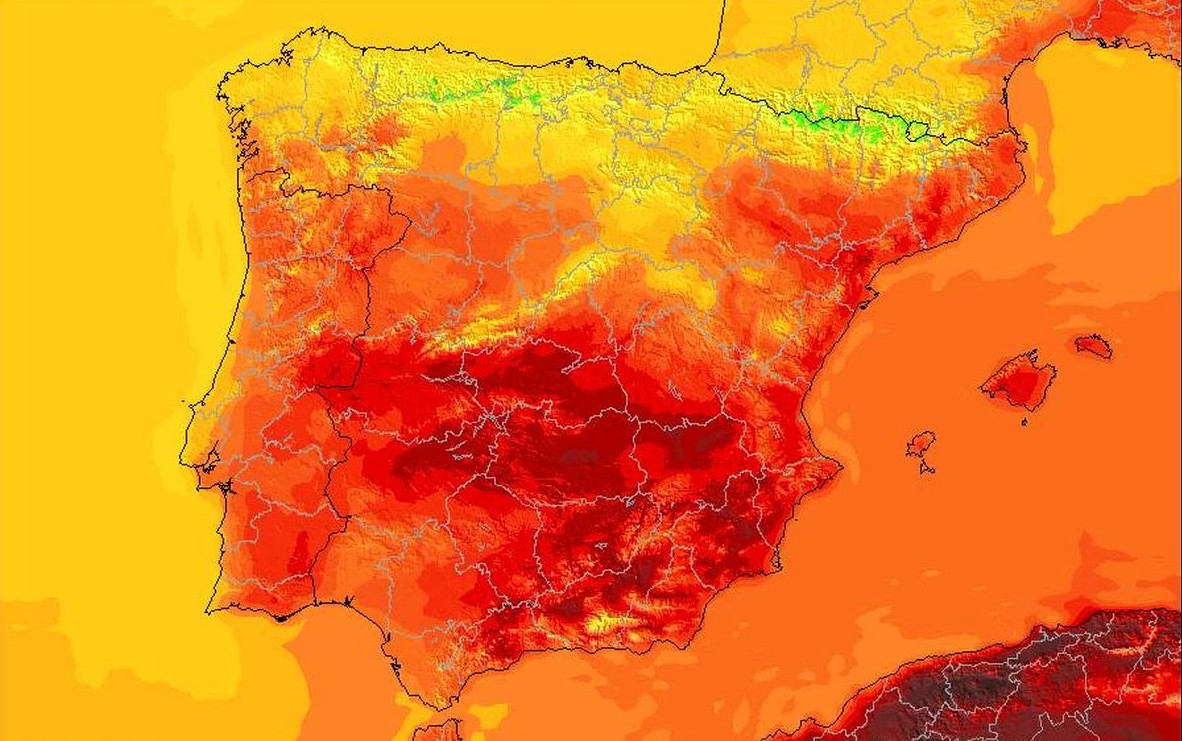
The most notable aspect of the meteorological analysis is the sharp increase in environmental water deficit in 2025 compared to 2024 and especially to 2023. This increase reveals a significantly drier environment with higher thermal load, translating into greater evaporative demand and higher atmospheric stress on the crop.
The predominant ranges of water deficit (grams of H₂O per kilogram of air) were:
- 2023: 3–8 g/kg
- 2024: 8–12 g/kg
- 2025: 10–18 g/kg
This means that in 2025, systematically higher levels of atmospheric dryness were recorded, with maximum and average values much higher than in previous years.
In comparative terms, the average water deficit in 2025 was approximately 155% higher than in 2023, highlighting a substantial change in evaporative conditions in the field.
Adaptation to climate reality
The results obtained in 2025 are especially noteworthy from the producer’s perspective: a 9% increase in production compared to the technical criterion, while increasing water use by only 2%. And as is usual with BrioAgro, higher water-use efficiency was achieved—meaning more kilograms of commercial production per liter of irrigation water—which in the case of eggplant represented a 7% increase.
From the perspective of adaptation to climate conditions, 2025 was marked by an exceptionally high environmental water deficit. This indicator reflects the atmospheric conditions in which the crop develops (grams of water per kilogram of air). The value, obtained from the geolocated meteorological stations that BrioAgro provides to its customers at no cost, was 155% higher than in 2023, demonstrating extremely dry conditions and a higher thermal load.
In this trial, BrioAgro’s system managed irrigation automatically according to guidelines established at the beginning of the crop. Although these guidelines could be adjusted, only two modifications were made:
- A more conservative adjustment in spring, with slightly lower thresholds.
- A higher threshold in late spring and summer, to anticipate the sharp increase in water deficit.
With this approach, the system activated irrigation when the soil moisture dropped below the set threshold to prevent the crop from approaching water stress conditions.
The combination of data provided by BrioAgro ViTA and the irrigation control capability of Aqua Power enabled a highly adaptive irrigation strategy (smart irrigation):
- On days with mild water deficit, irrigation events were spaced further apart.
- During severe deficit periods, the system irrigated up to three times in a single day, without excessive pulses that could cause percolation nor insufficient irrigation that could induce stress.
This level of real-time adaptation has proven clearly advantageous compared to models based solely on evapotranspiration, which are useful but less reactive to sudden atmospheric changes.
Additionally, a recurring situation observed both in this trial and in others is noteworthy: when rain is forecast, some technicians, farmers, or their models stop irrigation preventively. However, in many cases the actual rainfall does not provide the equivalent of an effective irrigation, generating water stress that in this trial appeared in late July and early August in sectors not managed by BrioAgro. In contrast, the sector controlled by BrioAgro did not experience such stress, as the system autonomously adjusted irrigation frequency based on the actual moisture of the root zone, maintaining water stability throughout the cycle.
The increase in yield per hectare generates a direct economic benefit for the farmer, especially in high-value horticultural crops. Furthermore, greater water efficiency helps reduce operating costs.
Related links for this publication:
10/11/2025. Eggplant results on Plataforma Tierra:
27/05/2024. Agroauténtico reporting on the results:
BrioAgro ensaya su riego inteligente en sandía y pimiento: ahorro y más kilos por metro cúbico
29/04/2024. Watermelon and pepper results on Plataforma Tierra: