Oficina C acts as a bridge between the scientific community and policymakers. Its work consists of listening to experts, analysing studies on relevant issues, such as the climate, water or pests, and passing this information on to Members of Parliament through clear and accessible summaries. The objective is for lawmaking to take scientific evidence into account and not just opinions.
On 30 October 2025, it published the report “Drought in Spain”, a document that essentially highlights that drought has become one of the greatest challenges for Spanish agriculture. It analyses how irregular rainfall, rising temperatures and pressure on water resources increase the vulnerability of the agricultural sector. Furthermore, it offers a comprehensive view of the risk, its impacts and the strategies needed to strengthen the resilience of farming.
This is the most comprehensive overview carried out to date on one of the most significant climate risks for our country. You can download the full report in PDF here:
https://oficinac.es/sites/default/files/informes/2025_10_30_InformeC-Sequia-oficinac-fecyt-congreso.pdf (in Spanish)
At BrioAgro, we highlight eight key lines of work for the future of agriculture and livestock farming, which are drawn from this report:
- Modernise irrigation effectively: implement sprinkler or drip irrigation accompanied by a real reduction in water allocations and without expanding the irrigated area, reviewing concessions to ensure that the savings are genuine.
- Precision agriculture and digitalisation: sensors, drones, GIS, IoT and artificial intelligence to adjust irrigation, fertilisation and management according to the real needs of the crop.
- More drought-tolerant varieties and crops: boosting genetic improvement aimed at water stress and the conservation of plant genetic resources and wild relatives as a strategic reserve.
- Agroecological and regenerative practices: agroecology, regenerative agriculture, agroforestry, cover crops, crop rotations, crop diversification and the use of beneficial microorganisms to improve the soil, organic matter and water efficiency.
- Change in the production model: promote crops that are less demanding of water, adjust sowing calendars and diversify sources of income (for example, agritourism) to reduce economic vulnerability.
- Rethink the irrigated area: open a national debate on its future dimension, seeking a balance between profitability and resilience, and avoiding the “rebound effect” associated with modernisation if it does not reduce total consumption.
- Specific measures for livestock farming: efficient drinking troughs, rainwater harvesting, extensive grazing and drought-adapted forage to reduce water use and maintain ecosystem services.
- Economic and agricultural policy levers: drought insurance (including loss of pasture), financial incentives, PAC/CAP eco-schemes and the review of concessions to guide decisions towards greater water resilience.
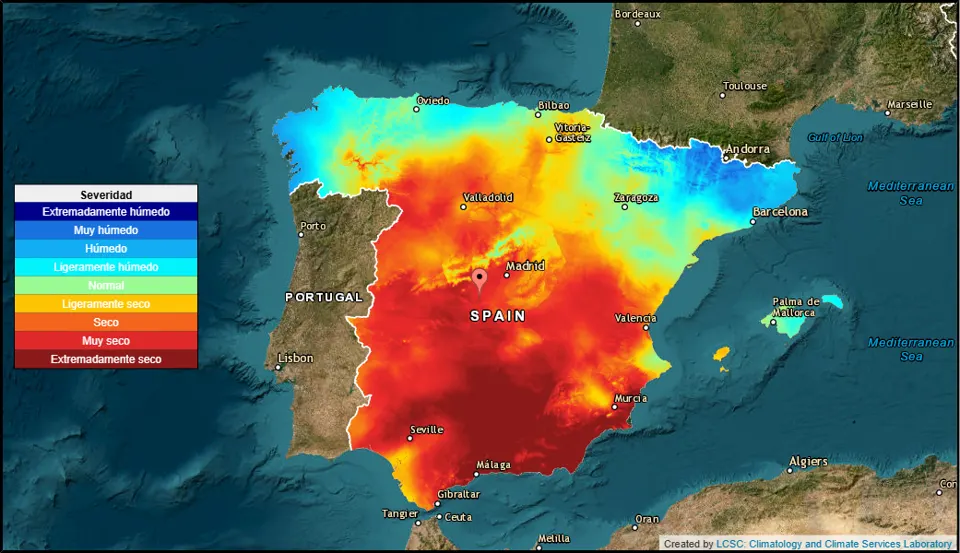 (in Spanish)
You can consult another detailed analysis of this report at:
https://www.plataformatierra.es/actualidad/sequia-y-sector-agrario-un-informe-parlamentario-plantea-el-debate-sobre-el-futuro-del-regadio-espanol (in Spanish)