This article reports on the preliminary trials carried out at the Tecnova Experimental Centre in Almería as part of the European LIFE NextFUMIGREEN project. This project aims to test the efficacy of a smoke generator based on natural active ingredients to combat the most important pests in horticultural crops, focusing initially on the whitefly. The trials were conducted in two cucumber greenhouses and involved the collaboration of various companies and organisations with experience in the field of agriculture and innovation.
Development:
The LIFE NextFUMIGREEN project, 60% funded by the European Commission's LIFE Programme, seeks to develop natural fumigants from plant extracts to control whitefly populations in greenhouse horticultural crops. To this end, a consortium of companies and organisations has been formed, contributing their experience and knowledge in different areas.
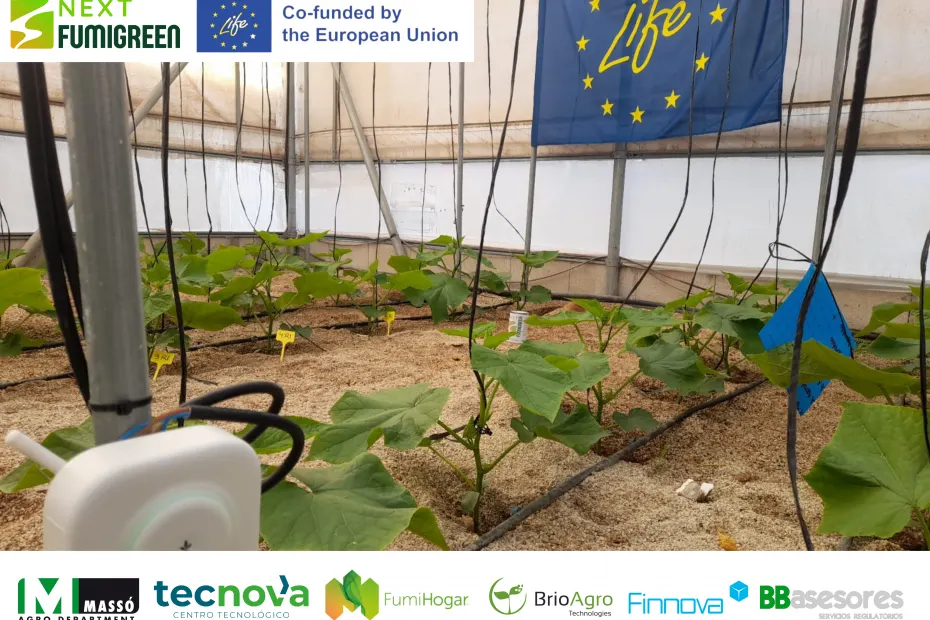
During this technical visit on 9 May 2023, a preliminary trial was carried out to adjust the dose of the smoke generators intended to combat the whitefly. These smoke generators are being developed as part of the LIFE NextFUMIGREEN project, led by FumiHogar, a company with extensive experience in formulating pest control products. The visit coincided with Europe Day, a symbolic date for the LIFE programme and European cooperation.
The trials were conducted on a cucumber crop in two greenhouses belonging to the Tecnova Experimental Centre. This preliminary phase continues the previous project “Development of natural smoke generators for the control of whitefly and botrytis in greenhouse horticultural crops”, funded by the CDTI, the results of which laid the foundations for the development of LIFE NextFUMIGREEN.
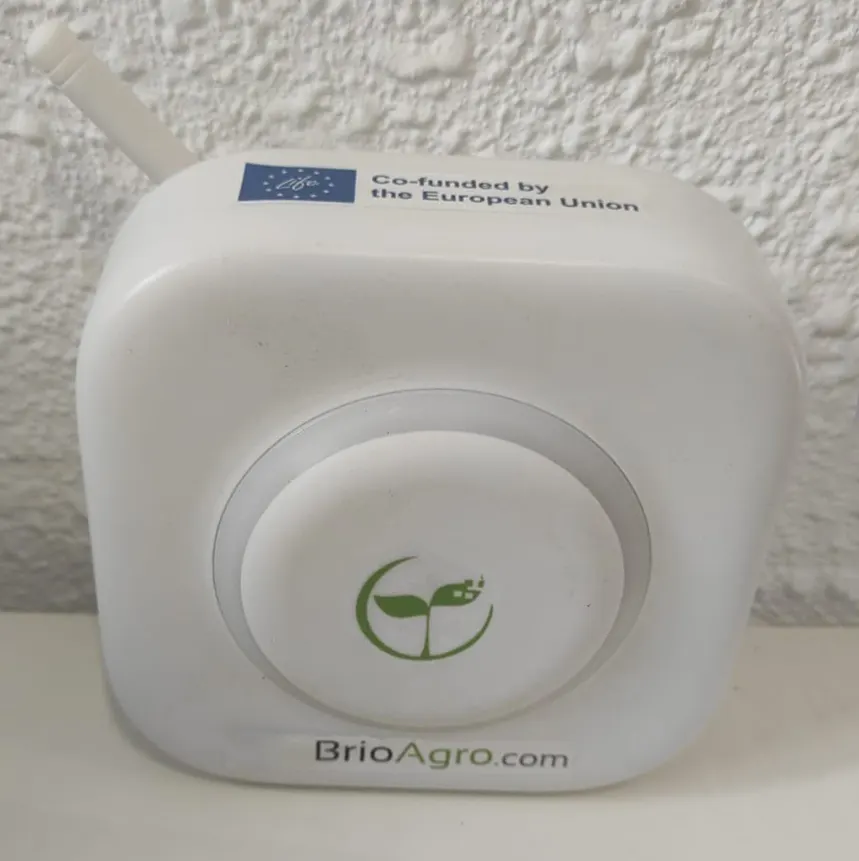
BrioAgro device with Air Quality Sensors in greenhouses
In this trial phase, greenhouse air quality sensors supplied by the company BrioAgro were incorporated, allowing the crop conditions to be monitored during the application of the smoke generators. The use of this technology seeks to optimise the properties of natural biopesticides, maximising their efficacy and minimising risks for both farmers and the environment.
The project consortium is made up of FumiHogar, Massó Agro and B&B Asesores Auditores Ambientales. FumiHogar is the leading company in the development of the smoke generators, while Massó Agro is dedicated to the distribution of chemical specialities for different sectors, and B&B Asesores provides its experience in processing and obtaining registrations and approvals.
In addition, the project has the collaboration of Fundación Finnova, a Spanish-Belgian entity based in Brussels and Spain, specialised in promoting innovation and entrepreneurship in the European Union.
Initial Conclusions:
The LIFE NextFUMIGREEN project represents an important advance in the search for more sustainable and less toxic solutions for pest control in greenhouse horticultural crops. The use of smoke generators based on natural active ingredients can contribute to improving food security, preserving biodiversity and reducing the environmental impact of agriculture.
The preliminary trials carried out at the Tecnova Experimental Centre in Almería mark the beginning of a research project that will span four and a half years and aims to validate the efficacy of these new smoke generators. Ultimately, this project is expected to contribute to the professionalisation of farmers in the use of biopesticides and encourage the adoption of more sustainable agricultural practices throughout the European Union.