History never ceases to recognise the centuries of experience Spain has had in olive oil production.
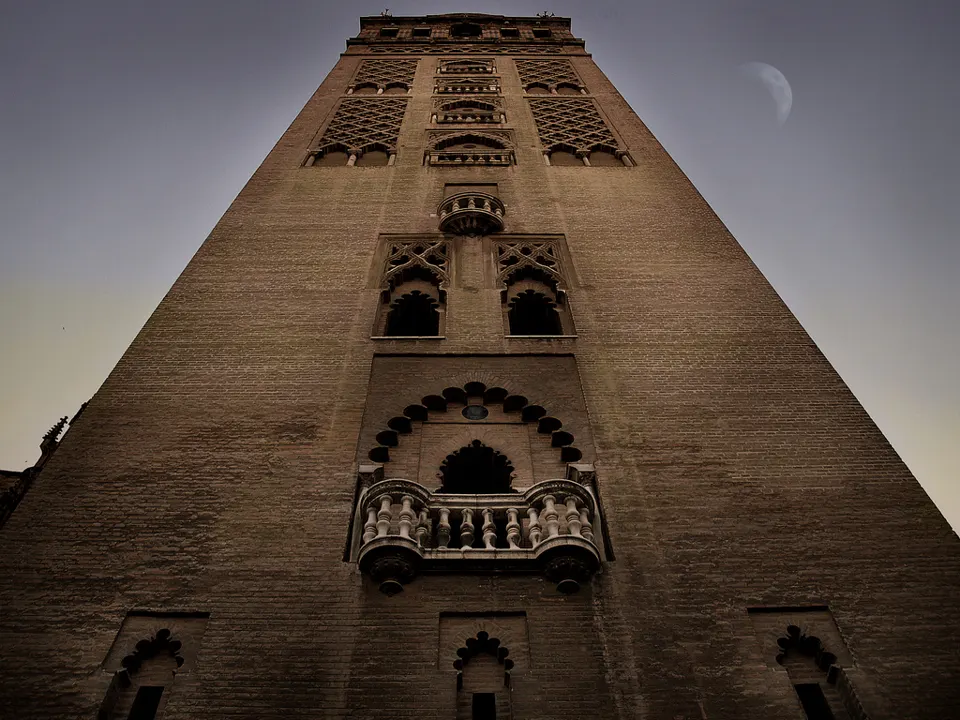
If you ever visit Seville, you will be able to find at the foot of the Giralda proof of Hispania's power in this production and trade, more specifically that which originated in BAETICA, present-day Andalusia.
The inscription dates from the second half of the 2nd century AD (CIL II, 1180), paying tribute to the knight Sextus Iulius Possesor, son of Iulius, making an exhaustive review of the existential curriculum he had accumulated over a lifetime full of posts and responsibilities; among which that of assistant to the prefect of the annona, commissioned by the State to guarantee the supply of Baetican and African olive oil to Rome, and that of PROCURATOR AD RIPAM BAETIS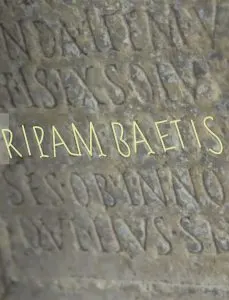
RIPAM BAETIS (The banks of the river Baetis, the present-day Guadalquivir)
This last post made him responsible for regulating and sustaining the navigability of the future Guadalquivir, its dykes, its ports and its canals, counteracting in passing the more or less disastrous consequences of periodic flooding; for guaranteeing the public nature of the waterway and maintaining the good condition of its banks and port facilities; for keeping the riverbed clean and well drained, in a river of very wide morphology that carries a lot of mud and has a rather unstable bed; for the correct maintenance of the towpaths, and for paying and controlling the olive oil merchants, packers, transporters and boatmen's corporations (scapharii), directly under his jurisdiction. It was these, in particular, who dedicated the tribute to him in Hispalis for the honesty displayed in the exercise of his duties.
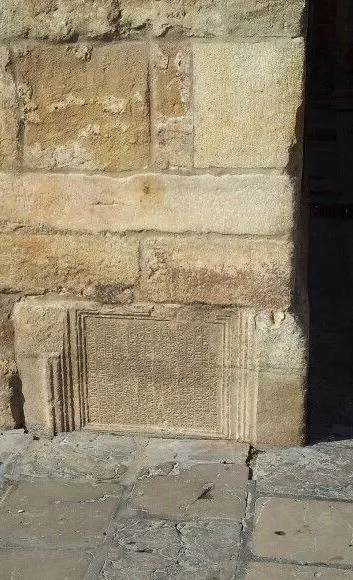
Stone slab with Latin inscription on the lower right base of the Giralda in Seville.
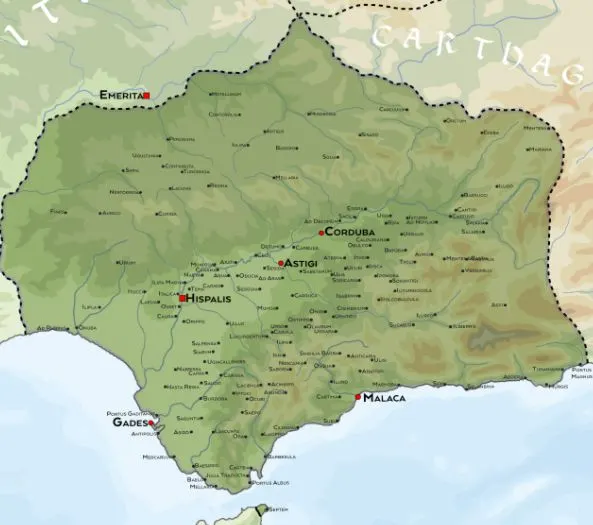
Map of BAETICA (Much of the present-day territory of Andalusia)
There is much other evidence that has been found on the stamps of Roman olive oil amphorae, such as the one shown in the image below, where, not without difficulty, one can read: P O R P A H
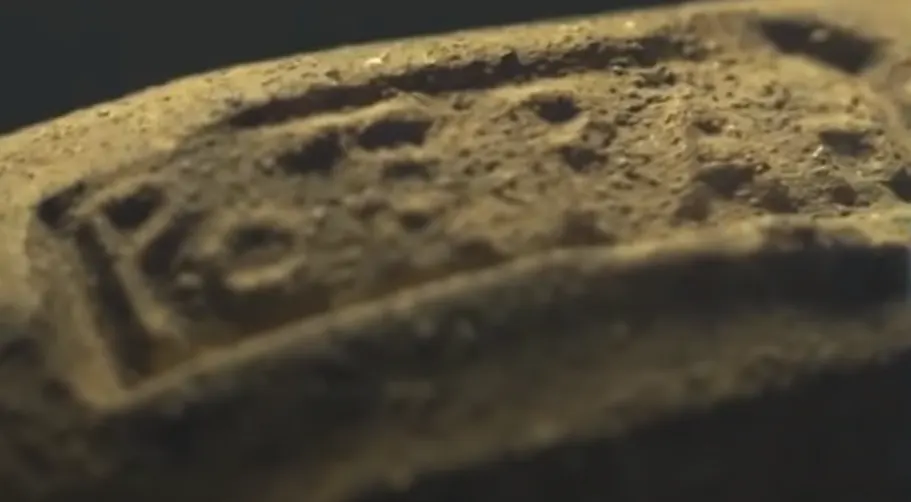
P O R P A H – Inscribed on the handle of a Roman olive oil amphora.
- POR, possibly referring to Portus or his oil warehouse
- PAH, possibly referring to Publius Haelius Hadrianus, the father of the emperor Hadrian
That is to say, possibly the source of wealth of the family of the later emperor Hadrian, would have its origin in the olive trees of Baetica and the profits from the olive oil supplied to Rome from Hispania.
So you know, the next time you visit Seville, be sure to take a photo next to the Giralda, and you can now tell a story as interesting as this one when identifying the base of the one known as Giganta.
SOURCE: ACADEMIA.EDU